
In this issue: The power of tapping into human identity and purpose in conversations, why communication matters more than the sophistication of your tech, some examples of how to use marketing principles in leading people teams
Let’s begin with some data
- According to 2024 Edelman Trust at Work Report: Listening, respecting diverse perspectives, and involving people in change are now core trust-builders.
- Gallup‘s latest Leadership research shows: only 26% of employees said that the feedback they receive feels more like support and less criticism.
- According to Hacking HR 2026, two of the four priorities that will define business success in 2026 are: 1. Cultivating a culture of Respect and Trust 2. Enabling managers to lead through Conflict and Change
- Two of the 3 most critical actionable strategies people leaders can use to support business growth : 1. Investing in self development 2. Strengthening psychological safety for innovation (Emtrain 2026 Workplace Culture Report)
Taking a page from the marketing playbook
The FRAMING effect in marketing speaks to a neurological shift in perception, identity and possibilities to improve sales. It works more on human psychology than the product itself. Here are some time tested examples:
- 1% fat fries VS 99% fat free fries (how you phrase a benefit dramatically changes how people perceive it)
- Annual membership €350 VS access the gym daily at €1 (breaking down a large sum to smaller chunks makes it seem more accessible)
- Buy this ring VS the first 50 customers get their names engraved on the ring (people value things more if they contribute to the effort )
- Get started at €9,99/ month VS start your free trial today (People value things more once they have ownership)
The same approach can deliver great results when it comes to leadership and managing team(s).
Some scenario based examples for emerging leaders
Loss vs Gain framing
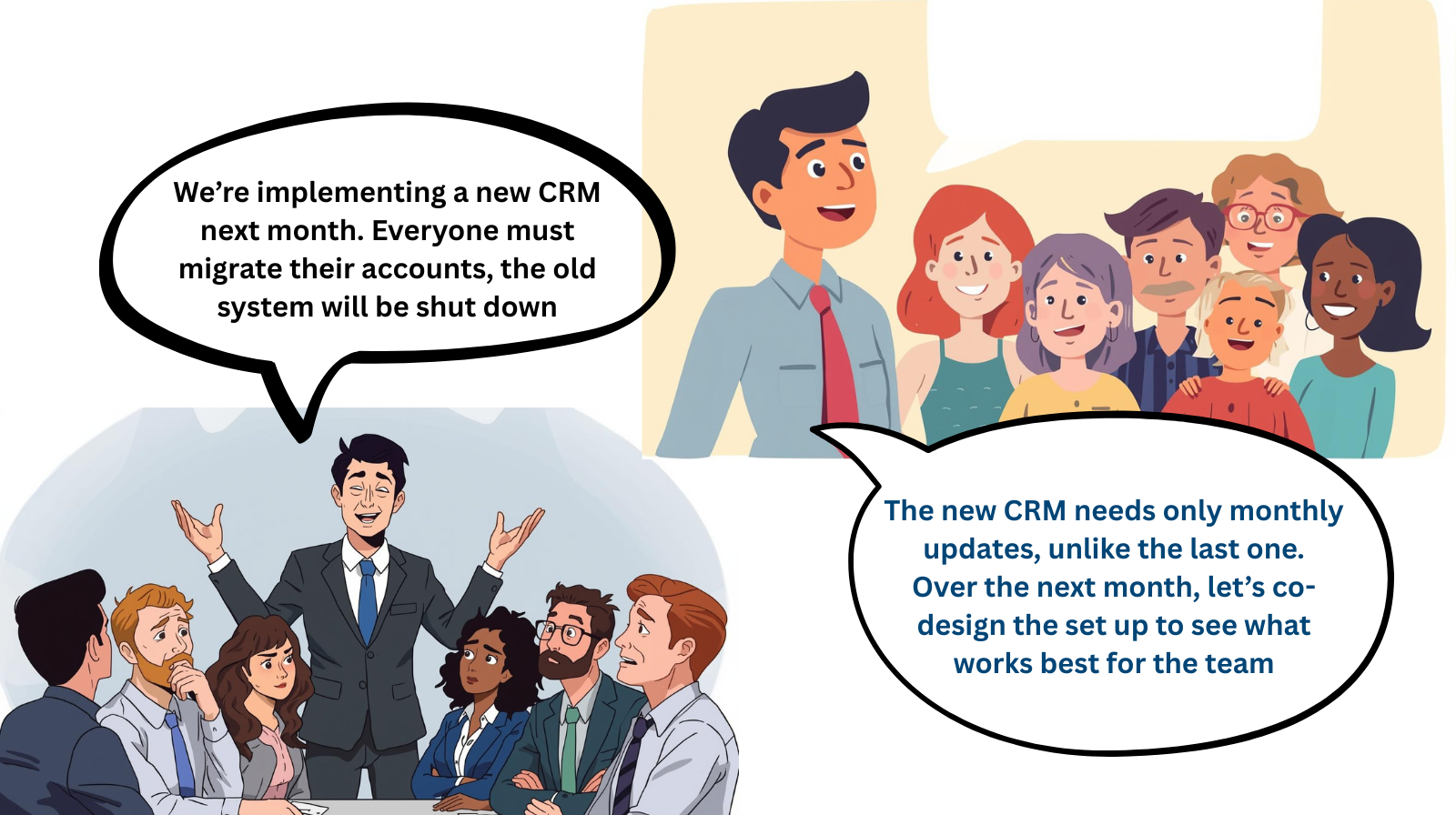
Effect: Same change, but the second frame activates the human identity and possibility which makes a huge difference.
Judgement vs Growth framing
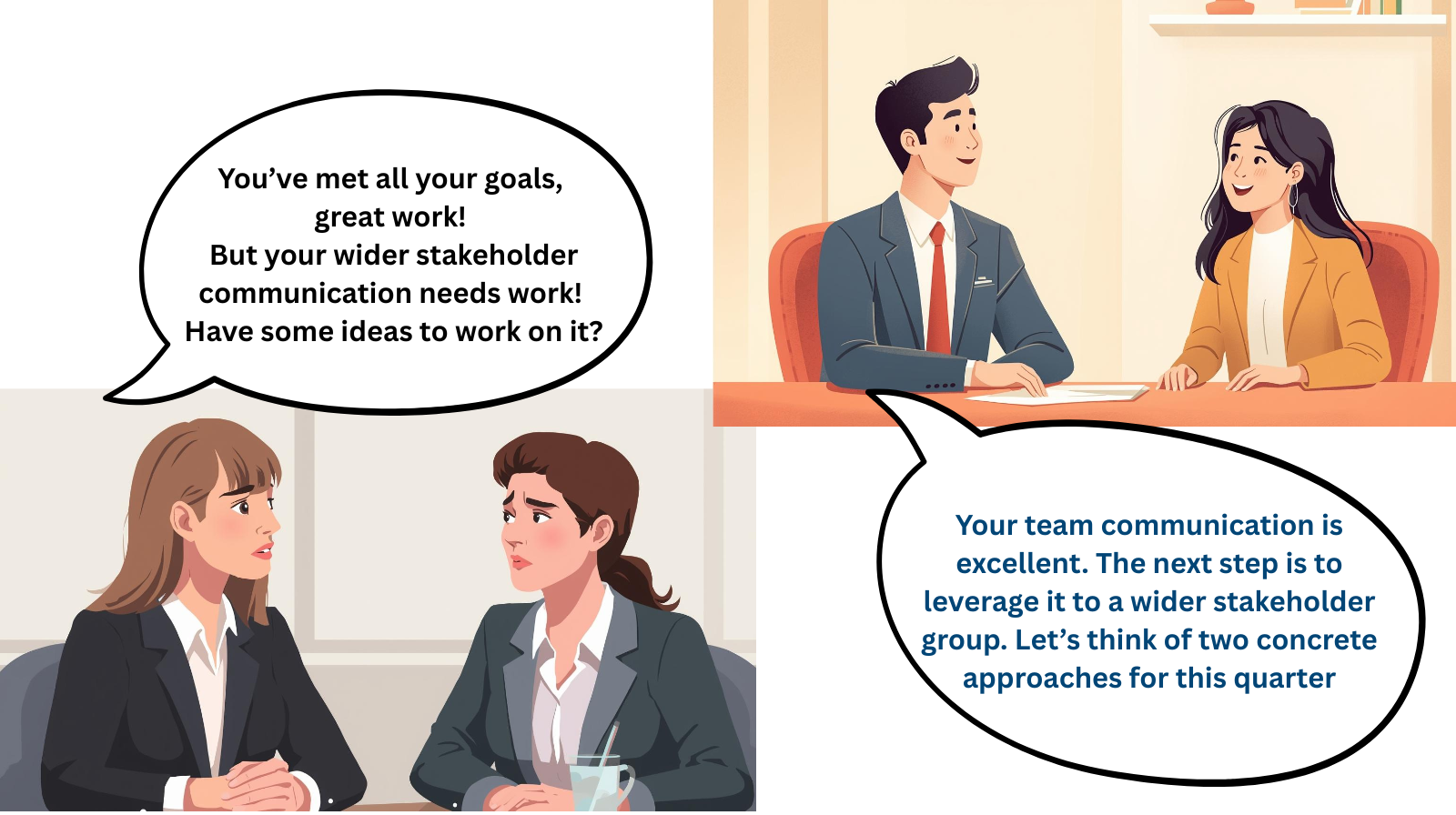
Effect: Same information, but the second frame shifts from the issue to how to improve on an existing skill to broaden it, which lowers the threat and opens the door to change.
Control vs Co-creation framing
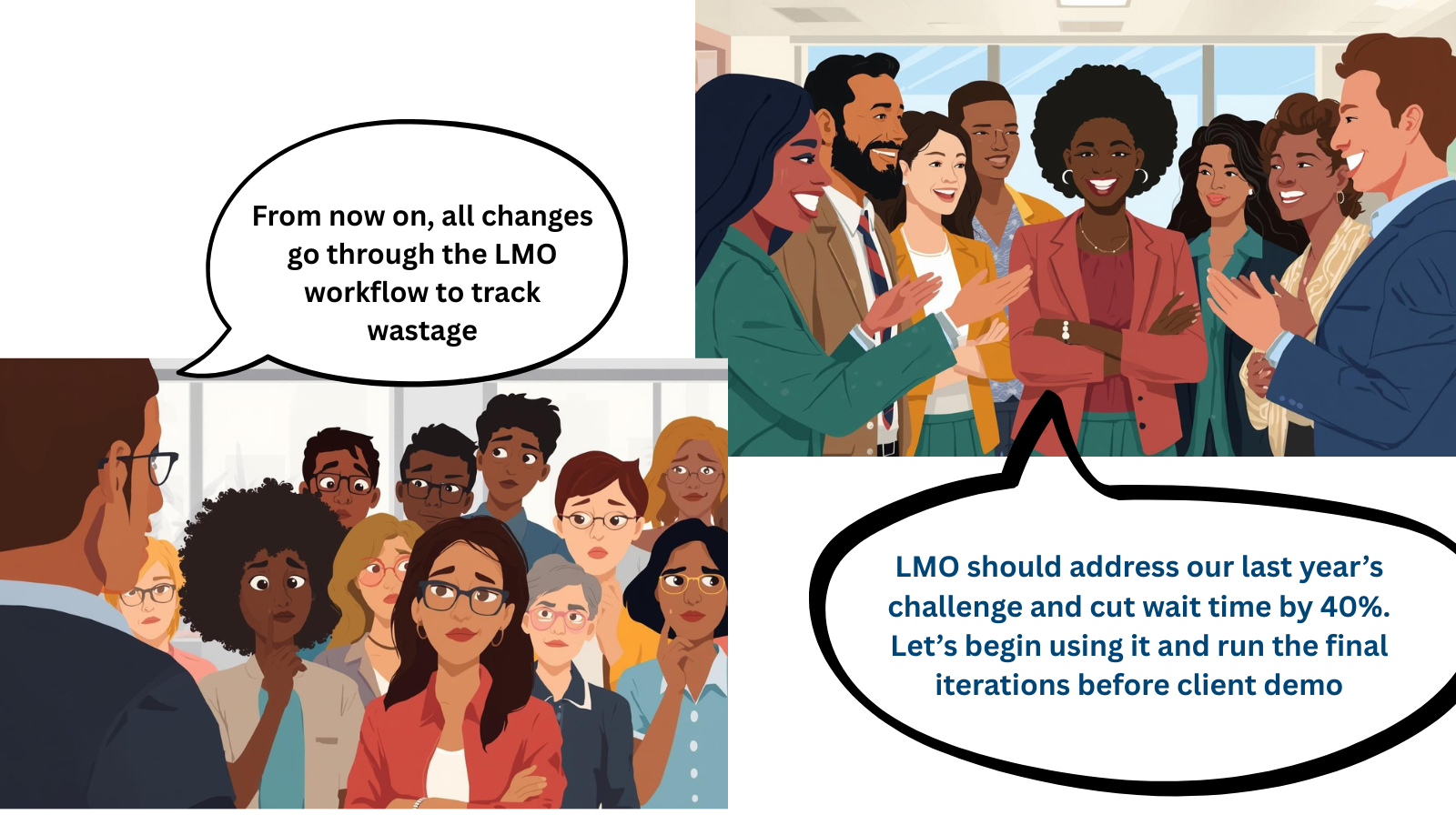
Effect: The second frame makes people part of the solution and showcases the change as an experiment, which reduces the fear of failure.
Fear vs Challenge framing
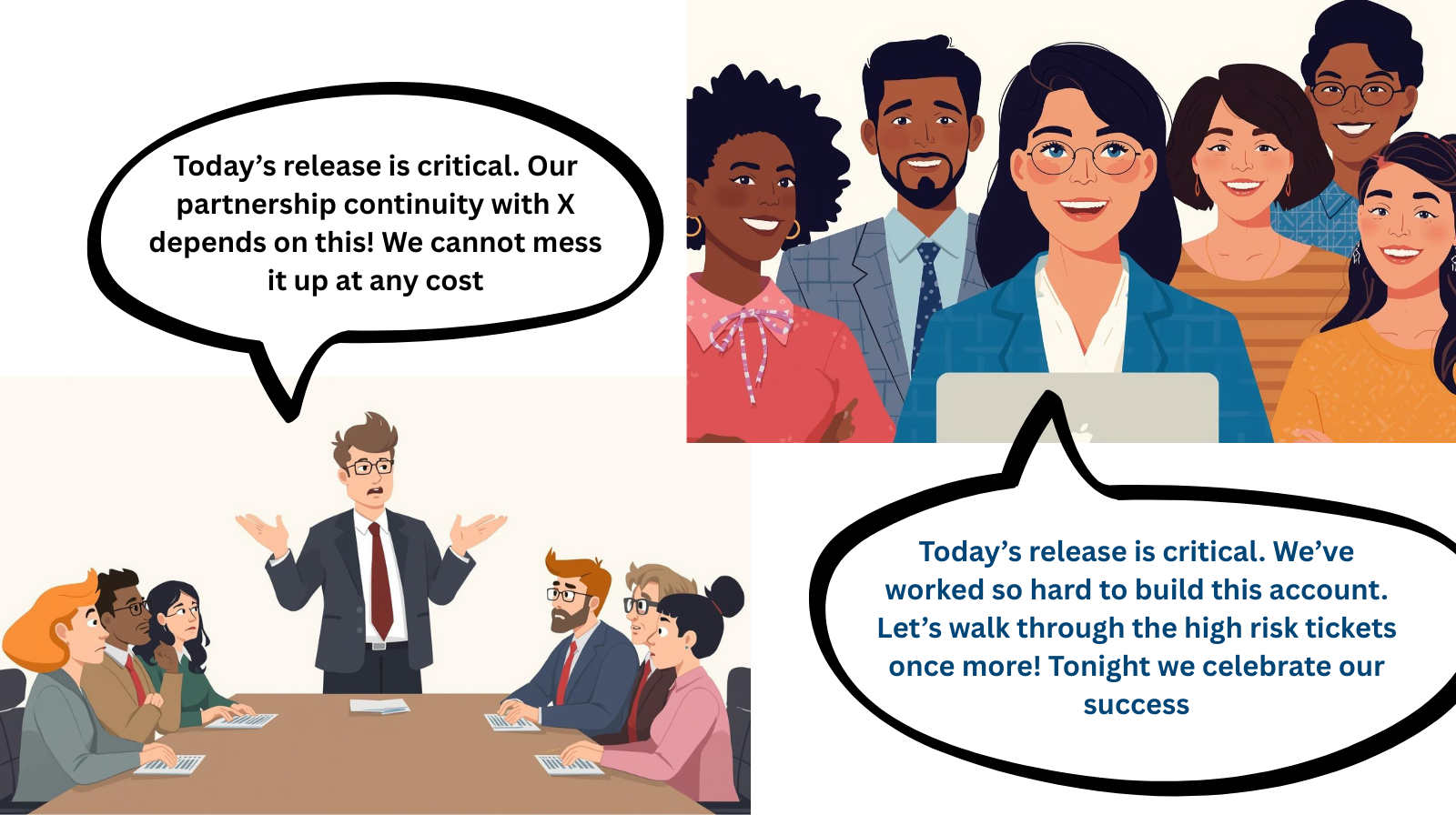
Effect: Both acknowledge risk, but the second frame leans on competence and shared challenge, not anxiety.
Identity evolution vs demolition framing
This is probably one of the most challenging
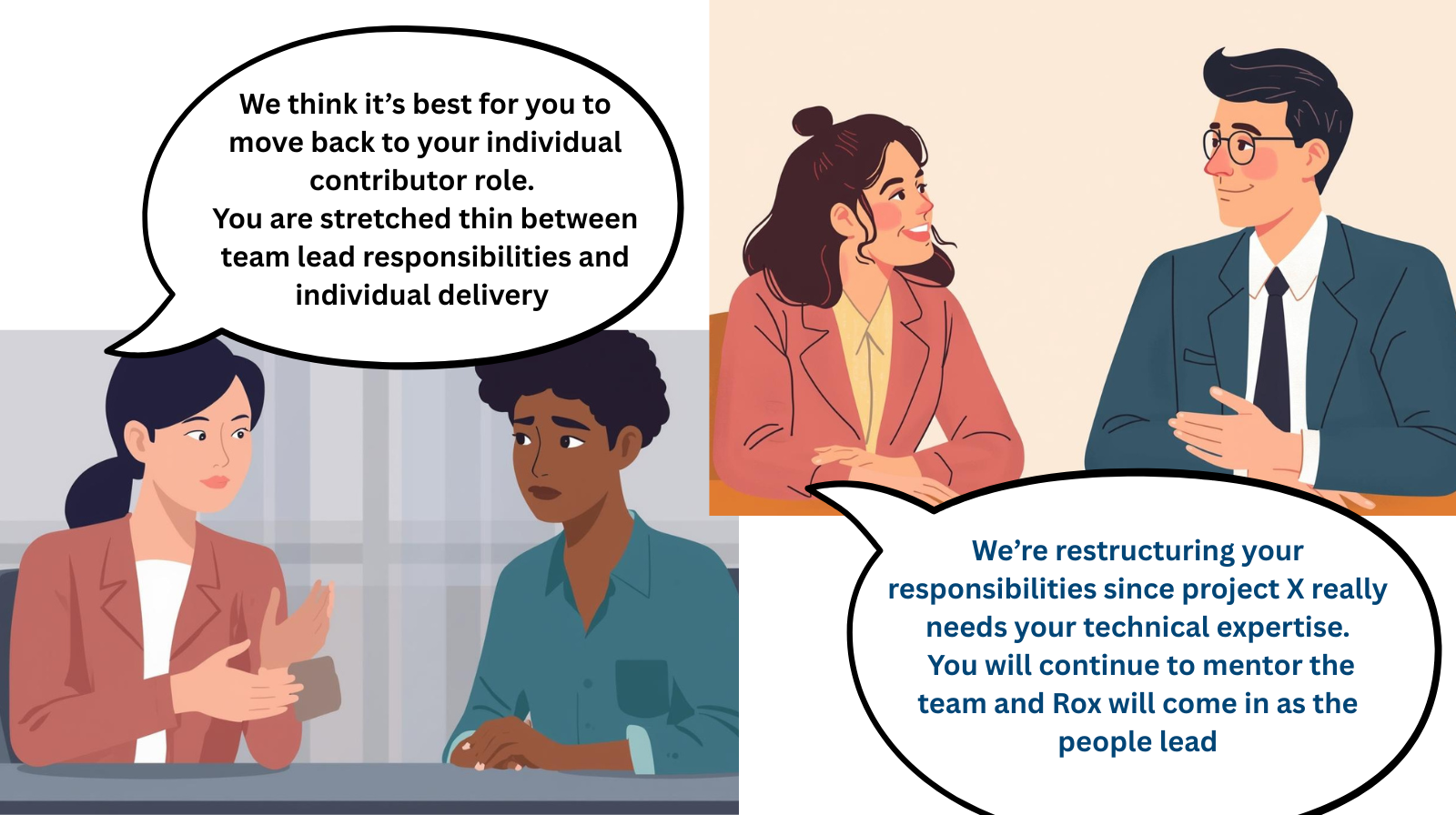
Effect: The second frame safeguards individual identity and shows a different expression of leadership, making the change less threatening.
Same Message. Different Framing. Different Results.
(P.S. All the scenarios used here are imaginary and do not directly target or comment on any company, individual or teams)
The Emerging Leader Mindset
Strong brands don’t sell products, they sell identity. Leaders need to do the same. Change sticks when it connects to identity!
For People leaders, this approach ensures a quantum leap from the rather rudimentary PIP (Performance Improvement Programs) to Perception, Identity and Possibilities (PIP framing). Simply put, it shifts people from feeling devalued to recognizing how critical they are to the company’s growth!
In the K.I.N.D. Program, we explore how emerging leaders can map communication framing with their leadership personalities, to drive change successfully and build a safe space for their people to thrive!
References:
- Cheng, X., Zhang, C., & Guo, X. (2025). The effect of probability and framing on the default effect in risky decision-making. Behavioral Sciences
- European Scientific Journal. (2025). Framing the decision: An experimental study of managerial judgments after leadership training. European Scientific Journal, 21(25), 1–18
- van der Wardt, V. et al. (2019). Towards successful digital transformation through co-creation. BMC Health Services Research, 19, Article 605.
- Logic20/20. (2025). Case study on change management: Enhancing it with co-creation. Logic20/20 Insights (online case study)